
New strategy may target the WNT signaling pathway to treat cancer with minimal side effect
Weill Cornell Medicine | 11-02-2026
Researchers have found a surprisingly common vulnerability in a broad variety of cancers and have begun designing drug compounds to exploit it, in a study led by investigators at Weill Cornell Medicine. The findings suggest the possibility of a potent, low-side-effect treatment that could benefit many patients with colorectal, breast, and other cancer types.
The new strategy targets the WNT signaling pathway, whose hyperactivity is common in cancers and boosts malignancy through multiple mechanisms. Targeting WNT signaling without harming normal cells has been notoriously difficult. However, in the study, which appears Nov. 2 in Nature Chemical Biology, the researchers found that many cancer cells are deficient in one of two redundant WNT-supporting enzymes. They showed that selectively targeting the remaining one reduces WNT signaling in such cells with no apparent effect on healthy cells. The researchers demonstrated the strategy successfully in early preclinical experiments with a selective enzyme inhibitor they developed.
“There’s still a lot of work to be done, but so far this looks like a rare example of being able to use tumor cells’ genetics to target them while sparing normal cells,” said study senior author Dr. Lukas Dow, professor of biochemistry in medicine and a member of the Sandra and Edward Meyer Cancer Center at Weill Cornell Medicine.
The study’s first author was Dr. Jill Zimmerman, a Weill Cornell Graduate School of Medical Sciences doctoral student in the Dow Lab during the study.
WNT pathway hyperactivity is seen in almost all colorectal cancers, more than half of breast cancers, and substantial proportions of liver, lung, prostate, skin, bone and gynecologic cancers. One anti-WNT strategy has been to target a pair of WNT-supporting “tankyrase” enzymes called TNKS1 and TNKS2. But inhibiting these enzymes can harm healthy cells too, and experimental tankyrase inhibitors have had dose-limiting side effects in initial clinical trials.
Several years ago, however, Dr. Dow and his team discovered a common vulnerability in WNT-driven cancers that had been hiding in plain sight.
“We stumbled across this by accident,” Dr. Dow said. “We were knocking down TNKS1 and TNKS2 independently to understand how their biological roles might differ, and we noticed that in some cancer cells, we needed to knock down only TNKS2 to see an effect on WNT signaling.”
As they develop, most cancers undergo large-scale DNA deletions, and the researchers realized that one of the most common of these happens to delete the gene for TNKS1. That in itself doesn’t harm the cancer cells, since TNKS2 is still present and serves the same function. But it gives these cancerous cells a selective vulnerability to the loss of TNKS2—so that a drug inhibiting just TNKS2 could hobble or kill those cancerous cells while sparing healthy, TNKS1-containing cells.
The team confirmed the viability of the concept using genetic techniques to suppress TNKS2 selectively, then set out to develop a drug molecule that could do the same thing.
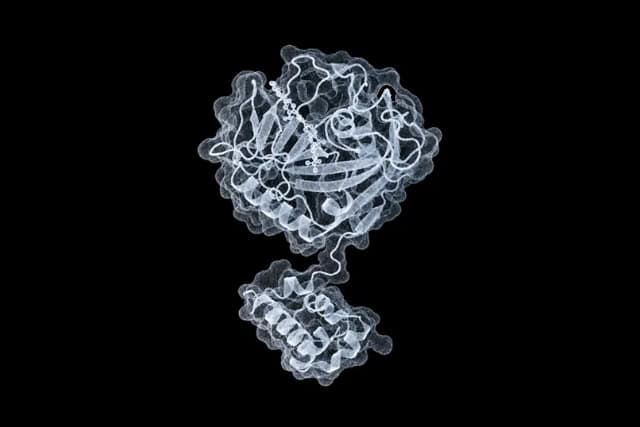
Devising a TNKS2 inhibitor that would have little effect on TNKS1 was a real challenge, given that the active sites of TNKS1 and TNKS2 are virtually identical. But with collaborating computational and medicinal chemists, the team ultimately were able to come up with an effective design based on what was known about the slightly different structures of the two enzymes. Screening compounds made according to this design strategy yielded one that inhibits TNKS2 about 30 times more than TNKS1. In lab dish tests, the compound suppressed the growth of cancer cells that had partial or full TNKS1 loss, but did not affect the growth of cells containing a normal amount of TNKS1.
The Dow lab now hopes to develop a next-generation compound that will have better drug-like properties using detailed structural models of TNKS1 and TNKS2 developed late in the study. If such a compound performs well in full preclinical tests, the researchers hope to take it into clinical trials.
“Targeting the WNT pathway in cancer without side-effects has been a challenge for decades now, but we’re aiming to change that,” Dr. Dow said.
Source:
Materials provided by Weill Cornell Medicine. Content may be edited for clarity, style, and length. Please refer to the journal article for additional information, including the complete list of authors and their affiliations, as well as details on conflicts of interest, financial disclosures, and funding.