
Cell therapy boost for advanced liver disease treatment
University of Edinburgh | 05-25-2026
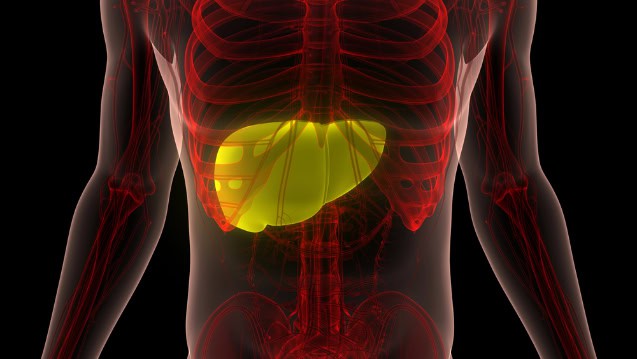
A new type of cell therapy shows promise as the first treatment for advanced liver disease, following results from a clinical trial.
Patients with the condition who were treated with the cell therapy had a significantly lower risk of death or need for a liver transplant after four years compared with those who received standard medical care.
Experts say the treatment offers a potential alternative to liver transplants for those in end-stage liver disease, which is currently the only curative treatment option but limited by donor availability, cost, and suitability for only a small subset of patients.
The liver has the unique ability to regenerate itself after damage. However, in patients with advanced liver disease, severe scarring – known as cirrhosis – can leave it damaged beyond repair, leading to liver failure.
More than three-quarters of people are diagnosed with cirrhosis when it is too late for effective treatment, contributing to more than 11,000 deaths per year in the UK.
Scientists at the University of Edinburgh have developed a pioneering cell therapy designed to tackle the scarred tissue and restore liver function.
The treatment involves taking immune cells from the patients’ blood and turning them into mature macrophages – a type of white blood cell that ‘eats’ infected or damaged cells – which are then re-injected back into the patient.
The macrophages travel to the liver, where they break down scar tissue, reduce harmful inflammation, and encourage the growth of healthy liver cells.
The treatment was tested in the MATCH clinical trial, with 26 patients receiving the macrophage therapy, while 24 received standard care.
After four years, 70 per cent of patients who received the macrophage therapy were living without the need for a liver transplant, compared with just 40 per cent of patients who did not receive the treatment.
There were eight deaths and no liver transplants among the patients treated with macrophages, compared with nine deaths and five liver transplants among those who received standard care. No serious side effects were reported in patients treated with the cell therapy.
The four-year follow-up period provides important insights into the long-term benefits and safety of the treatment, according to the research team.
The findings suggest the use of macrophage therapy is a promising therapeutic option for end-stage liver disease and represents a significant step forward in regenerative medicine, experts say.
The macrophage therapy was developed following more than a decade of research by the University of Edinburgh’s Professor Stuart Forbes, alongside the Scottish National Blood Transfusion Service (SNBTS).
In 2020, Professor Forbes co-founded spinout company Resolution Therapeutics, with the support of Edinburgh Innovations, the University’s commercialisation service, to bring the team’s pioneering science to patients. The company is currently testing a new version of the macrophage therapy, known as RTX001, in patients through the EMERALD clinical trial.
The study, funded by the Medical Research Council and Chief Scientist Office, is published in the journal Cell Stem Cell. The research team included scientists from the University of Dundee, SNBTS, Resolution Therapeutics, Tayside Clinical Research Centre, and Glasgow Royal Infirmary.
Professor Stuart Forbes, from the University of Edinburgh’s Institute for Regeneration and Repair, said: “Liver disease is a major cause of death of people in their working age. Although we can use liver transplantation as a rescue treatment for a proportion of people who have advanced liver disease, this is restricted by a lack of suitable donor organs. Unfortunately, many patients may die whilst on the liver transplant waiting list. There is therefore a desperate need for alternative treatments for patients with advanced liver disease. We hope this type of approach could one day add to our treatment choices for patients with advanced liver disease, reducing the need for liver transplants.”
Pamela Healy, Chief Executive of the British Liver Trust, said: “For people living with cirrhosis, these results offer something that has been in desperately short supply for far too long: real hope. Being told that a liver transplant may be your only option – and that one may never come – is devastating for patients and families. A treatment that could slow or reverse liver failure and reduce the need for transplantation would be truly life-changing.
“Patients have been at the heart of this research from the very beginning. The British Liver Trust has worked closely with the study team to support and involve people with lived experience of cirrhosis, helping to shape the research and encouraging participation in the trial. That patient voice is essential if new treatments are to meet the real needs of those facing this disease every day.”
Dr. Lara Campana, Scientific Co-Founder and Senior Vice President, Research & Translational Science at Resolution Therapeutics, said: “This study not only highlights the significant potential of regenerative macrophage therapy in patients with advanced cirrhosis, but it also offers us a glimpse into the mechanism whereby these cells achieve their therapeutic effect: analysis of patients’ blood revealed a strong anti-inflammatory effect of this therapy, which correlates with transplant-free survival.”
Source:
Materials provided by University of Edinburgh. Content may be edited for clarity, style, and length. Please refer to the journal article for additional information, including the complete list of authors and their affiliations, as well as details on conflicts of interest, financial disclosures, and funding.